
- home
-
Why Businesses Are Upgrading to Tube Laser Cutting Machine?
2025-12-12Tube fabrication is entering a new phase defined by automation, precision manufacturing, and flexible production. As global industries accelerate their transition toward smart manufacturing, laser tube cutting is becoming the preferred method for processing round, square, and rectangular metal tubes. Companies in construction, automotive, fitness equipment, furniture, and agricultural machinery are increasingly replacing traditional sawing, drilling, and milling with advanced tube laser cutting machines, not as a trend but as a strategic upgrade to stay competitive.
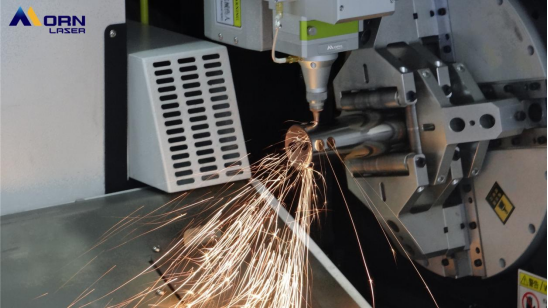
1. Market Shift: Tube Fabrication Demands Higher Precision and Efficiency
Metal processing standards are rising fast. Modern product designs require tighter tolerances, clean edges, and complex features such as bevel cuts, slots, and interlocking joints. Traditional tube fabrication methods struggle to deliver the consistency and accuracy required by today's industries.
A tube laser cutter solves these challenges by offering:
High-precision cutting on thin and thick tubes
Non-contact processing that eliminates deformation
Accurate repeatability for long production runs
Clean edges that significantly reduce secondary finishing
2. Automation and Labor Efficiency Drive Adoption
Across global markets, labor shortages are making manual tube fabrication increasingly unsustainable. Production managers need solutions that can maintain output with fewer operators and lower training requirements.
Modern laser tube cutting machines integrate:
Automatic loading and unloading
Smart tube centering
Adaptive clamping for different diameters
Real-time monitoring and digital job tracking
These features dramatically reduce reliance on skilled labor and allow production to keep running with minimal supervision, which is essential for manufacturers handling high-mix, small-batch orders.
3. Lower Operational Costs and Faster ROI
Although the initial investment in a laser tube cutting system may be higher than conventional equipment, the long-term economic benefits are substantial.
Businesses report cost improvements from:
Reduced scrap rates due to precise, stable cutting quality
Eliminated tooling costs, with no need for saw blades or burr removal
Shorter production cycles and faster delivery times
Lower maintenance and less downtime
For many factories, the ROI cycle is 6–24 months, especially when producing complex tube components.
4. Enabling More Advanced Product Designs
As product designers push for lightweight structures, and visually appealing tube components, laser tube cutting becomes essential. The technology helps companies develop stronger, lighter, and more aesthetically refined products.
This design freedom is particularly valuable in industries such as:
Fitness and gym equipment
Automotive chassis and exhaust systems
Smart furniture
Architectural metalwork
Agricultural machinery
The ability to turn creative designs into manufacturable parts quickly is a major competitive advantage.
5. A Key Technology in Smart Manufacturing
Laser tube cutting machines are not isolated equipment. They are essential building blocks in modern digital factories. With ERP, MES, and automated storage system integration, manufacturers gain real-time visibility and streamlined workflows.
The result:
Reduced manual handling
Faster order switching
Better production scheduling
Higher machine utilization
As industries adopt Industry 4.0, laser tube cutting is becoming a core technology for efficient, data-driven metal tube cutting.
Businesses are upgrading to laser tube cutting because it delivers what modern manufacturing demands: precision, efficiency, flexibility, and digital integration. Whether the goal is lowering production costs, improving product quality, or preparing for future automation, a laser tube cutting machine offers a reliable and scalable solution.


![]() Get a Quote
Get a Quote
![]() Get a Quote
Get a Quote x
Get a Quote
Get a Quote x
![]()

