
- home
-
What Does “Good Cutting” Really Mean When Fiber Lasers Cut Stainless Steel?
2025-12-09In a workshop, a sheet of stainless steel is fed into a laser cutting machine. A few seconds later, a clean slit appears and the part drops out easily.
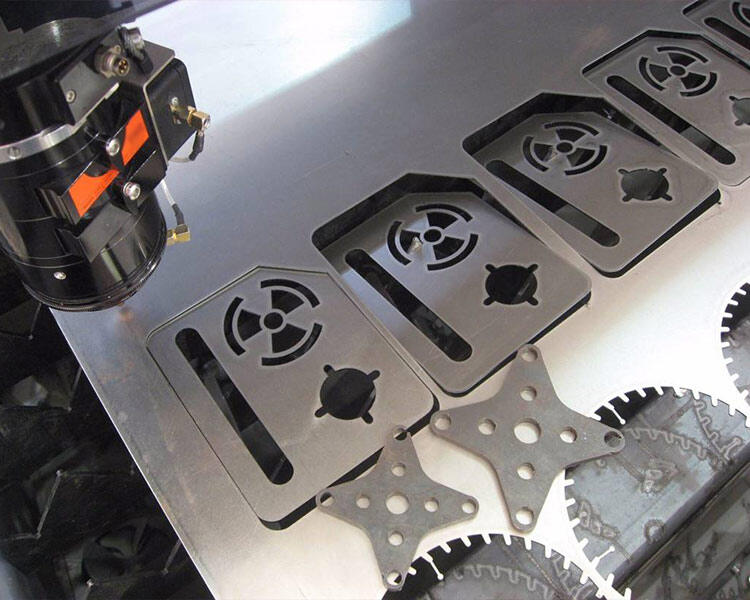
Looks simple, right?
But if you look closely, you’ll notice something interesting:
Some cuts are smooth and shiny, like polished artwork;
Others look rough, dark, or have dross hanging at the bottom, sometimes requiring secondary grinding.
So what makes the difference?
The key isn’t how expensive the machine is — it’s how you use it.
Fiber laser cutting machines have become the standard in metal fabrication, especially for stainless steel. They offer high speed, low energy consumption, and require less maintenance than CO₂ lasers.

Yet many users buy a high-power fiber laser only to discover:
“Why do other shops get mirror-smooth edges, while I still need rework?”
The truth is, achieving high-quality stainless steel cutting isn’t about mysterious “high-tech secrets.”
It’s about mastering a few simple but critical fundamentals.
Below are the practical techniques that anyone can apply.
1. Higher Power Doesn’t Mean Better Cutting — Matching Matters More A common question:
“If I want to cut 6 mm stainless steel, do I need a 10 kW or 12 kW laser?”
Not necessarily.
Laser power does affect capability, but the quality of the cut depends on using energy wisely, not excessively.
Example:
Cutting 1 mm thin sheet → a 2 kW machine with correct parameters gives fast, bright, burr-free results
Using 12 kW on thin sheet → too much heat, causing burn marks, yellowing, or distortion
The key is matching power and speed to thickness:
Recommended Matching
Thin sheet (0.5–2 mm): 1–3 kW, high speed, clean bright edges
Medium thickness (3–8 mm): 4–6 kW, balanced speed/power, good verticality
Thick plate (8+ mm): 6 kW or higher, but requires optimized piercing and gas control
Think of it like cooking — too much heat burns the food, too little leaves it raw.
Perfect results come from proper control, not brute force.
2. Nitrogen Doesn’t Just “Blow Out Slag” — It’s the Cosmetic Artist for Stainless Steel
Many think assist gas only blows molten metal away.
In stainless steel cutting, assist gas can influence quality even more than the laser itself.
Stainless steel resists corrosion because of its chromium oxide protective film.
If exposed to oxygen during cutting, this film is destroyed — leaving the cut edge dark or oxidized.
That’s why stainless steel must be cut with inert gas, usually high-purity nitrogen.
But nitrogen pressure matters:
Too low → molten metal isn’t expelled → bottom dross
Too high → turbulent airflow widens the kerf and causes ripples
Typical nitrogen pressure ranges
1–3 mm: 12–15 bar
6 mm and above: 18–20 bar + larger nozzle
And purity is critical:
Below 99.99%, moisture and oxygen will cause gray edges or micro-rust spots.
Saving a little money on gas can ruin an entire batch of high-value stainless parts.
3. Focal Position: The Invisible “Blade Tip” That Determines Cut Quality
A laser beam is strongest at its focal point.
You can’t see it, but its position directly determines the quality of the cut.
Focus too high (above surface) → weak energy density → poor penetration
Focus too low (deep under the sheet) → overheated upper edge, trailing burr on bottom
Best focus → at mid-thickness or slightly below → symmetric edges, good verticality
Modern systems use auto-focus heads to maintain ideal focal distance in real time.
If your machine doesn’t have it, perform a focus test:
Cut the same pattern at different Z-values on scrap material
pick the cleanest edge
save those parameters as your template.
4. Piercing Technique: Don’t Let the First Step Ruin the Entire Cut
Many users focus only on the cutting process but ignore the piercing step.
Traditional “blast piercing” (full power instantly) creates:
large entry holes
molten splashes
micro-cracks
poor starting geometry
And the cut quality deteriorates from that first point.
A better way: gradual piercing
Use low power to preheat
slowly increase power until the material penetrates.
This takes 1–2 seconds longer but produces a smooth, stable starting point.
High-end systems now automatically choose the proper piercing method based on thickness.
5. Beyond the Machine — Human Experience Still Matters Most
Even the best fiber laser is still just a tool.
Cut quality ultimately depends on the operator’s understanding and attention to detail.
For example:
Is the sheet flat? Warping affects focus height
Are the lenses clean? A dust particle scatters the beam
Is the nozzle centered? Even a 0.1 mm offset tilts the kerf
Is the toolpath optimized? Excessive stops/starts leave marks
These subtle factors aren’t in the manual.
They’re learned through testing, documenting, and improving — the real craft behind perfect cutting.
Conclusion: Great Cutting Comes From Careful Control
Fiber laser technology has made stainless steel cutting faster and more accessible.
But it hasn’t eliminated the need for craftsmanship.
In today’s era of similar equipment and fierce competition, the shops that master every detail — gas, focus, power, nozzle, path — are the ones that deliver truly premium results.
So next time you see a stainless steel part with a mirror-like edge, remember:
It’s not just the laser.
It’s also the operator behind it, and their dedication to “just right.”


![]() Get a Quote
Get a Quote
![]() Get a Quote
Get a Quote x
Get a Quote
Get a Quote x
![]()

