Language
Sensors and signal lines are the nervous system of a laser tube cutting machine. They transmit positioning data, detect material presence, and ensure every cut lands exactly where programmed. When sensors drift or signal lines degrade, the entire machine loses accuracy. This guide covers the daily maintenance practices that keep your laser tube cutting machine's sensing system reliable.
A laser tube cutting machine relies on multiple sensors working together:
Length positioning sensors – determine where each cut begins
Rotary encoders – track tube rotation angle
Proximity switches – detect chuck position and material presence
Origin switches – establish reference points for each axis
Any degradation in these components causes length errors, positioning offset, or complete signal loss.
Visual check of sensor mounting: Before starting your laser tube cutting machine, inspect each sensor for secure mounting. Vibration during operation loosens brackets over time. A sensor that shifts even 0.5mm produces measurable positioning errors.
Clean sensor faces: Dust and metal particles accumulate on optical and inductive sensor surfaces. Wipe sensor faces with a dry, lint-free cloth. For a laser tube cutting machine operating in a dusty environment, this step may need repeating mid-shift.
Check indicator lights: Most sensors on a laser tube cutting machine have LED status indicators. Verify each light shows the expected state when the machine is homed and ready. A flickering or dim indicator suggests impending failure.
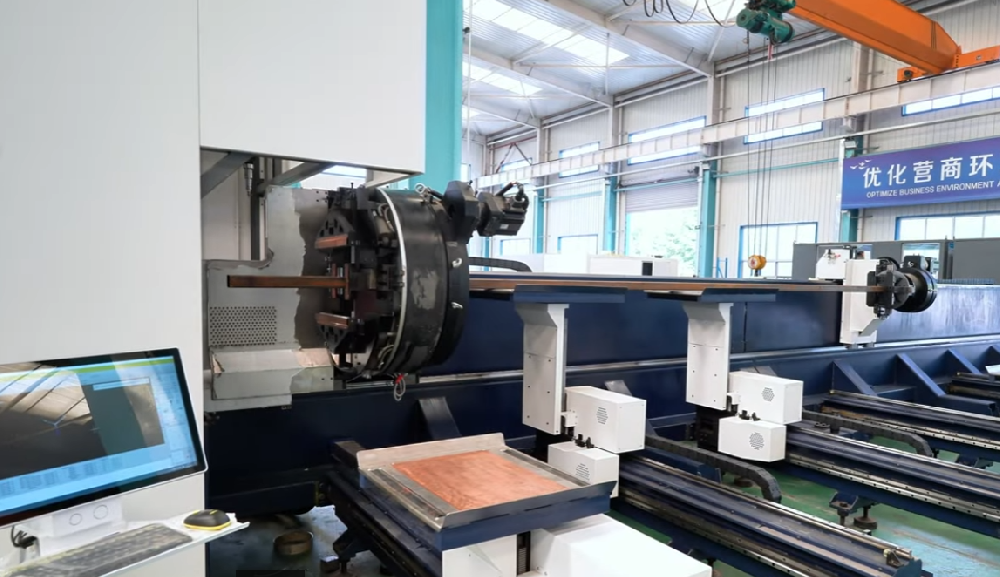
Signal cables endure constant flexing as the cutting head and gantry move. This motion causes internal wire breaks that produce intermittent faults—the hardest problems to diagnose.
Daily checks:
Inspect cable jackets for visible cuts, abrasion, or pinch points
Verify cable connectors are fully seated and locking rings are tight
Check cable routing—ensure lines are not rubbing against moving parts
Look for stress points where cables bend repeatedly
Warning signs on your laser tube cutting machine:
Intermittent position errors that appear and disappear
Random emergency stops without clear cause
Signal loss during high-speed movements
Error codes that reset after power cycling
Oxidation on connector pins creates resistance that degrades signal quality. On a laser tube cutting machine, this manifests as gradual accuracy loss rather than sudden failure.
Procedure:
Power off and lock out the machine
Disconnect the connector carefully
Apply electrical contact cleaner to both halves
Wipe with a clean, dry cloth
Reconnect and verify secure locking
Perform this cleaning monthly for critical sensors, or more frequently in humid environments.
Preventive measures extend signal line life on your laser cutting machine:
Use cable carriers: Ensure all moving cables run through proper drag chains
Maintain bend radius: Never force cables into tight curves
Separate power and signal lines: Route them apart to prevent electromagnetic interference
Add strain relief: Secure cables near connectors to prevent pull stress
Rotary encoders on a laser tube cutting machine demand particular attention:
Check coupling tightness: A loose encoder coupling causes position drift
Inspect for contamination: Oil or dust on the encoder disk produces signal noise
Verify cable shielding: Damaged shielding allows interference from servo drives
Inductive proximity switches detect metal targets without contact. On your laser tube cutting machine, these switches sense chuck position and material presence.
Maintenance points:
Clean the sensing face—metal chips can bridge the gap and cause false triggers
Verify sensing distance remains within specification
Check mounting nuts for tightness
Test response with a known target before production
| Component | Daily | Weekly | Monthly |
|---|---|---|---|
| Sensor mounting | Check | Tighten | — |
| Sensor faces | Clean | — | — |
| Indicator lights | Verify | — | — |
| Cable jackets | Inspect | — | — |
| Connectors | — | Check | Clean |
| Encoder couplings | — | — | Verify |
| Proximity switches | — | Clean | Test |
| Symptom | Likely Cause | Action |
|---|---|---|
| Length fluctuates | Front stopper sensor loose | Tighten and recalibrate |
| Random stops | Signal cable internal break | Replace cable |
| Position drift | Encoder coupling loose | Tighten coupling |
| False triggers | Metal chips on sensor face | Clean sensor |
| Intermittent errors | Oxidized connectors | Clean terminals |
Keep a log for your laser tube cutting machine recording sensor replacement dates and any recurring faults. Stock spare cables and sensors for critical positions—waiting for parts creates unnecessary downtime.
Sensor and signal line maintenance on your laser tube cutting machine is mostly about consistency. Clean daily, inspect cables weekly, and service connectors monthly. These simple habits prevent the intermittent faults that waste hours of troubleshooting and protect the accuracy your production depends on.
Copyright © 2008-2022 Morn Laser All Rights Reserved.