Language
A laser tube cutting machine is a precision tool that demands consistent care to maintain cutting accuracy and extend service life. Without proper daily maintenance, even the best machine will gradually lose performance, leading to dimension errors and unplanned downtime. This guide walks you through the essential daily tasks to keep your laser tube cutting machine running at its best.
The protective lens is the most vulnerable component on any laser tube cutting machine. During cutting, metal spatter, dust, and oil mist constantly threaten its cleanliness. A contaminated lens absorbs laser energy, reducing cutting power and causing poor edge quality.
How to do it: Before the first cut of the day, remove the protective lens and inspect it under bright light. If dust is present, use a rubber blower to remove loose particles. For stains or spatter, apply optical-grade cleaning solution to a lint-free wipe and wipe gently from center to edge in a single motion. Never reuse wipes—this can scratch the lens surface. Repeat until the lens appears completely clear.
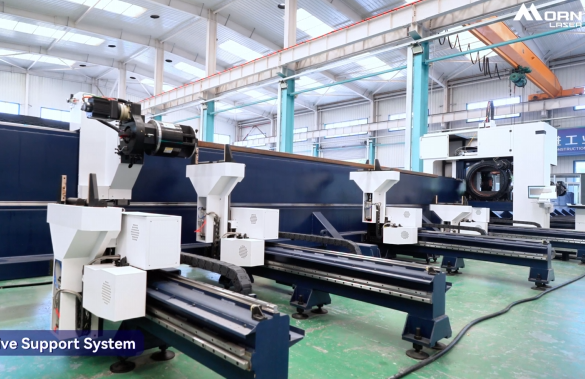
The nozzle directs assist gas to the cutting zone. On a laser tube cutting machine, spatter buildup inside the nozzle orifice restricts gas flow, reducing cutting efficiency and potentially damaging the cutting head.
How to do it: Remove the nozzle and inspect the orifice for spatter or deformation. Clean with a soft wire brush or replace if damaged. Check that the nozzle is properly centered—an off-center nozzle disrupts gas dynamics and leads to inconsistent cuts.
The conductive device transmits positioning signals between the tube and the control system. If the copper plate becomes loose or oxidized, your laser tube cutting machine will experience length errors and positioning drift.
How to do it: Open the side access panel and inspect the conductive copper plate. Tighten any loose screws. If the copper surface appears darkened or oxidized, gently polish it with fine sandpaper until it shines. This simple step prevents the most common cause of length inconsistency.
A slipping chuck compromises cut accuracy on any laser tube cutting machine. Dust and metal chips can accumulate on the chuck jaws, reducing grip force and allowing the tube to shift during rotation.
How to do it: Clean the chuck jaws with a brush and compressed air. Check for wear—replace jaws that show visible scoring or deformation. Verify that the gripping pressure is appropriate for the tube wall thickness. For thin-walled tubes, adjust pressure to avoid crushing while maintaining secure hold.
Your laser tube cutting machine relies on a chiller to maintain stable operating temperature. Insufficient coolant or poor circulation causes thermal drift, affecting both laser output and mechanical accuracy.
How to do it: Check the chiller water level and top up with distilled water if needed. Verify the temperature reading stays within the recommended range—typically 20-25°C. Inspect the chiller air filter and clean it if dust is visible.
Dust and debris accumulate on guide rails and ball screws, increasing friction and accelerating wear. Clean rails and apply a thin layer of lubricant according to your machine manufacturer's recommendations.
How to do it: Use a clean cloth to wipe dust from the rails. Apply a thin, even coat of recommended lubricant. Move the axis through its full travel range to distribute the lubricant evenly.
| Task | Frequency | Time Required |
|---|---|---|
| Clean protective lens | Before first cut and after each job | 2-3 minutes |
| Inspect/clean nozzle | Start of shift | 1 minute |
| Check conductive device | Start of shift | 2 minutes |
| Clean chuck jaws | Start of shift | 2 minutes |
| Verify coolant | Start of shift | 1 minute |
| Clean/lubricate rails | Start of shift | 3 minutes |
A complete daily maintenance routine for your laser tube cutting machine takes less than 10 minutes but prevents hours of downtime. Establish a consistent schedule—perform these checks at the same time each day so they become a habit.
Keep a simple log for your laser tube cutting machine. Record cleaning dates, lens replacements, and any abnormalities observed. This documentation helps identify patterns—for example, if lenses need cleaning more frequently, it may indicate fume extraction issues that require attention.
Before performing any maintenance on your laser tube cutting machine:
Turn off the main power supply and wait for capacitors to discharge
Wear appropriate PPE including safety glasses and gloves
Allow the cutting head to cool before touching optical components
By following this daily maintenance routine, your laser tube cutting machine will deliver consistent, accurate cuts while maximizing component life. A disciplined maintenance habit pays for itself many times over through reduced downtime and extended service intervals.
Copyright © 2012-2026 Morn Laser All Rights Reserved.